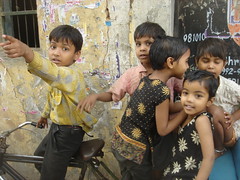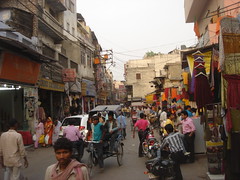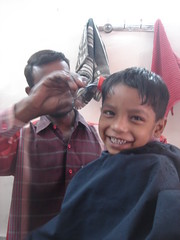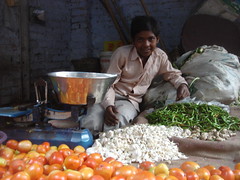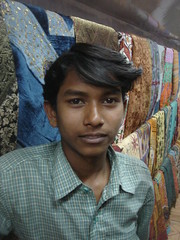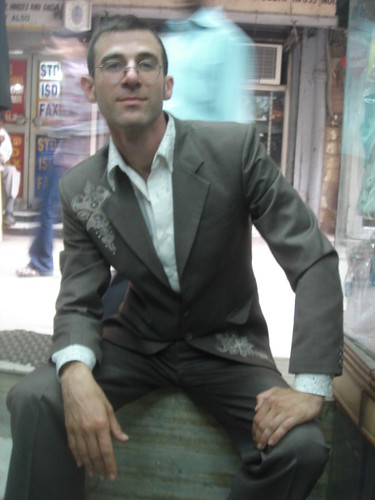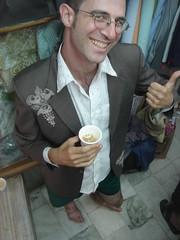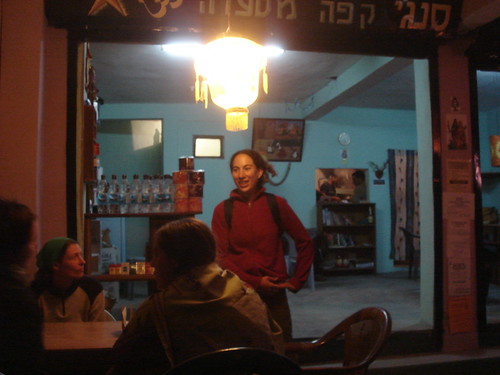
One fateful day, while I am learning to cook momos, or something, Alex meets an interesting woman from Israel named Rivka. They chat, and before you know it, we're all introduced, and planning a trek into the frozen Himalayan mountains together. This is just how things are around here. What follows is our story. A story involving Tintin, Ibex, beasts, flowers, mountains, snow, ice, fire, meteors, aliens, spaceships, icons, clouds, dubious motives, revenge, frustration, cotton, not cotton, and people. It's about people. People doing things.
Rivka proposes a particular trek, and claims that we don't need a guide. A self guided tour. It's all very persuasive. We'll all just go off on our own. Besides, Rivka has a map, and knows what she's doing. Briefly, I remember a story Na'amah, also an adventurous Israeli lady, told me about setting off on a trek in these very mountains without a guide or supplies, thinking she and her sister could just go from village to village. They hit some rain, got lost, and thought it was all coming to a rapid end for them. Some villagers saved their lives, and they lived to tell the tale. I think about Rivka's proposition for a moment -- are we about to put our lives in the hands of a crazy know it all Israeli trekker? -- and quickly agree that this sounds like a brilliant idea. Why not?
We learn, over time, that Rivka is a kind of action figure super hero who will no doubt one day have her own extensive line of tastefully appointed action figures. Over many days we learn that she is from a
Moshav, has worked as a shepherd, cheese maker, milk maid, a butterfly researcher on Mt. Hermon, undertaken research expeditions to Iceland to study foxes, built wilderness trekking routes and staircases, moved inflatable tanks around the desert for the Israeli military, speaks Turkish, and works as a professional travel guide. I'm probably missing a few things, and not making anything up, on purpose, anyway. She's a life sized action hero with a huge heart. She even goes under multiple assumed identities: rivka, rebecca, and becky. Perhaps she works for the Mossad, or some other intelligence organization.
All adventures begin with planning and shopping. Except those that don't. Ours is the kind that does.
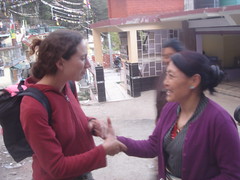
First, we need Tibetan cookies. We randomly meet a Tibetan woman who shares some with us, we make friends, and next thing we know, Rivka has come into a bag full of baked goods. Score!
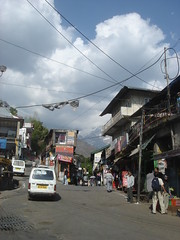
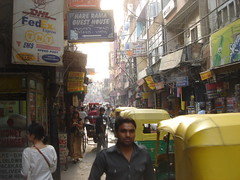
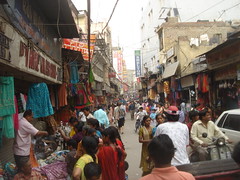
We explore all of Dharamsala for supplies, like a tarp so we don't die on account of the weather, sleeping bags, food, and other instruments and supplies necessary to adventurers such as ourselves undertaking expeditions such as we will.
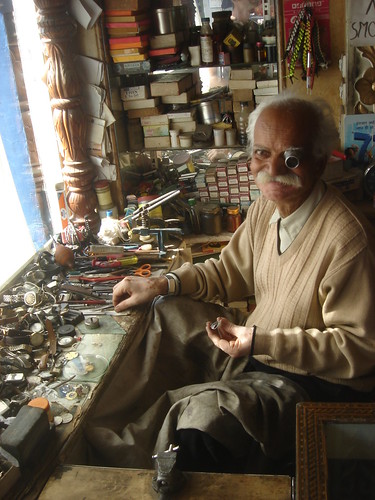
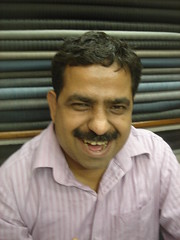
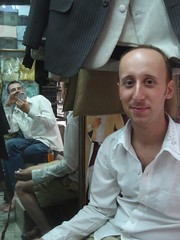
In our search for fuel we meet this man. He appears to be some kind of highly specialized tinkerer and repair man. The optical device helps him see the future, which he is licensed to make changes to. I make a mental note to return to him in case I ever need such work done.
We face some important questions. What kind of cooking oil to bring with us? Olive oil is the natural choice for all of us, but it's so expensive. A five liter tank is 1600 Rs, imported from Italy via Delhi -- totally insane! I realize that Ghee, the choice cooking fat of this populous nation, is readily available in large quantity for cheap. I pitch oatmeal with ghee as a possible breakfast, and the item is purchased. Chocolate? Check. Tahini -- which no Israeli, apparently, can survive for more than three days without? Check. Rivka really wants to make Chapati on our trip so we don't have to carry as much bread, so we spend a while shopping around for an appropriate implement for heating them on. We finish acquiring, organizing, and packing a bunch of gear.
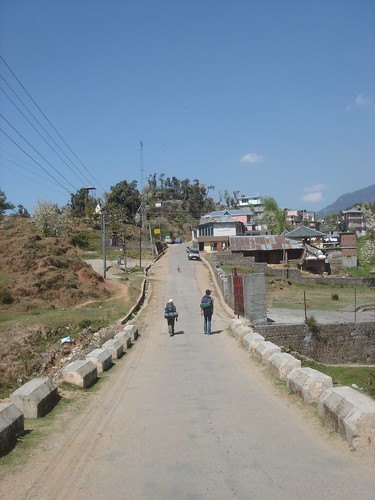
And just like that, we're off. Our agenda is to hike one day up to a small, remote village, and spend the night in a family's village house. The next day we'll hike up to a frozen mountain lake, where we'll camp. We'll hike back and spend one more night on the trail before we return home.
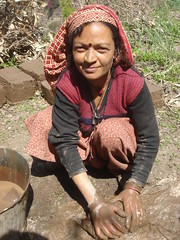
We pass through a handful of super tiny villages. Kids are especially excited to see us, and then ask us for money.
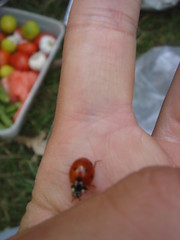
I make a new friend at lunch.
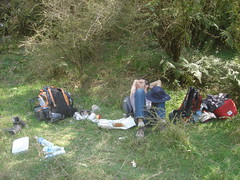
In the midst of this dense foilage, and blogspot's web design, one can make out the faintest outlines of Alex enjoying a post lunch break.
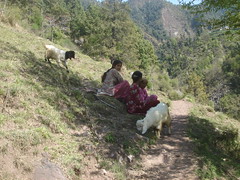
We hike up really high, and meet some shepherdesses.
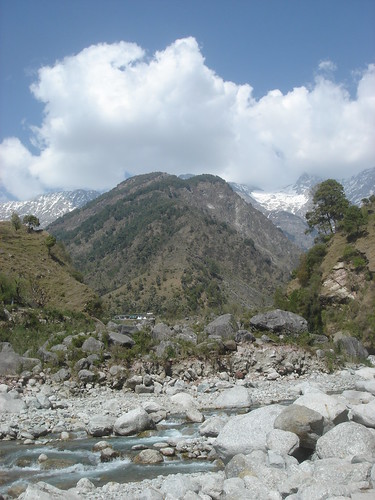
Then we hike down really low, and find a stream to cross. I do the bold and stupid thing and leap across multiple rocks with my pack on. Luckily now is not my moment to be punished with wetness for my poor judgement.
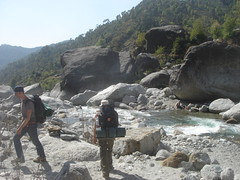
We hike more.
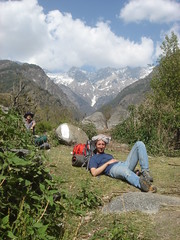

We stop to think about what we're doing, eat chocolate, and rest up. Chocolate is one of the most important items in our inventory.
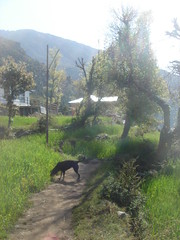
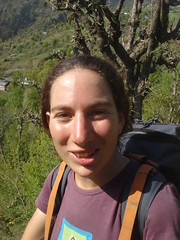
Finally, we start to converge on the valley below the village we're heading to. We meet an old woman spinning yarn. Rivka tries to buy some, but it's not for sale.
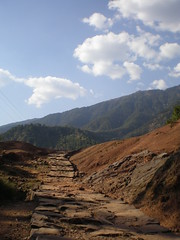
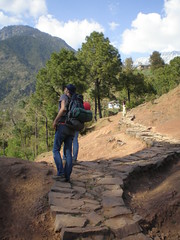
We find a yellow brick road, and decide it would be wise to follow it.
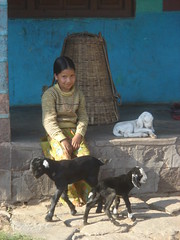
After the yellow brick road, we come to cute village populated by adorable children and animals. Oh, the cuteness.
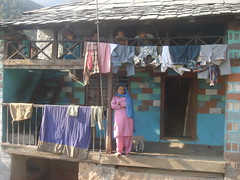
We pass down and up another valley. We are close now.
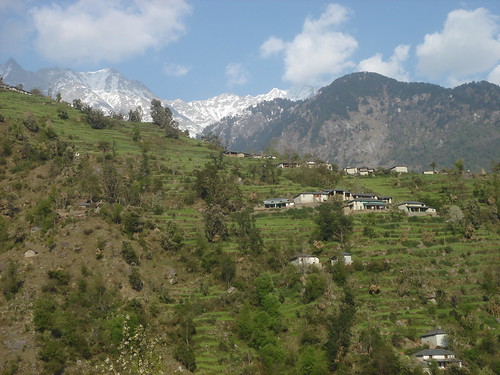
We go up and up.
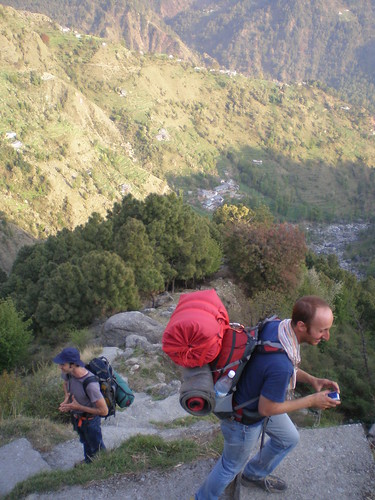
We conquer the final climb up the village. It's a vertical passage. At left, Alex is plotting something. At right, Chaim is plotting a photograph.
We are met by a boy, who invites us to stay at his family's place. We investigate.
Clearly, we've come to a very beautiful place. The village is about 10 houses sitting on a tiny terraced chip of mountain.
We arrive at the boy's house.
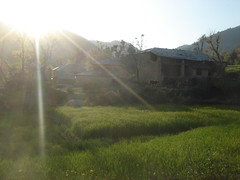
The view across to the neighbors'.

We ask about money, and the boy consults with the father, who consults with the grandfather. We come to understand that we aren't being asked to stay for money, which we feel slightly akward about.
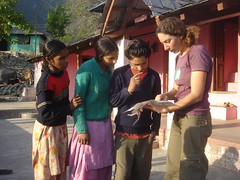
Rivka consults on our precise coordinates. Next to her is Aman, the boy who invited us over.
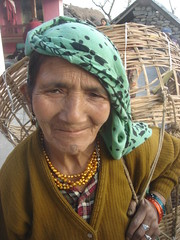
Woman with a basket for gathering wood to burn.
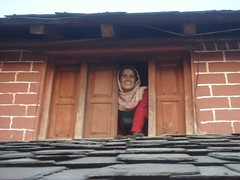
Hi, mom!
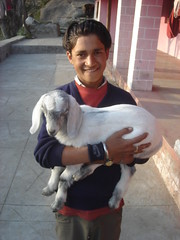
Aman with a baby goat. This goat, aside from the evil looking eyes all goats have, is the cutest animal ever. It positively exudes enormous joy at simply being alive, hopping around, and trying to figure out what it's legs are for. It chases chickens around and hops hops hops just because it can, and in a most uncoordinated way.
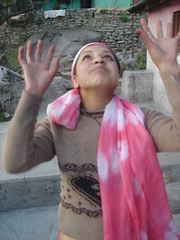
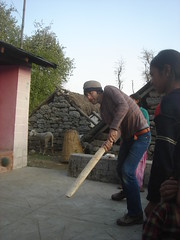
We are invited to a cricket match. Little known fact, but Alex is a five time champion on the USA cricket team. Aman's sister, at left, in the process of catching a ball.
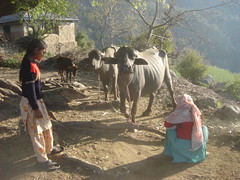
The village consists mostly of wheat and animals, it seems.
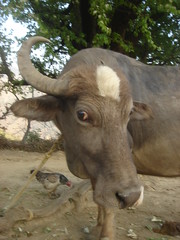
There are lots of animals. Every nucleus and cell membrane of this enormous cow, many times larger than me, is totally and completely terrified of my presence. It's a weird feeling.
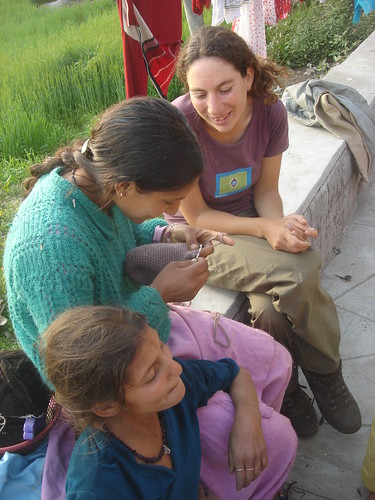
Rivka teaches the girls how to make bracelets. This is some kind of a storybook world. The view, the people -- everything vibrates with energy and beauty. We've come to the heart of something very special, but I'm not sure exactly what.
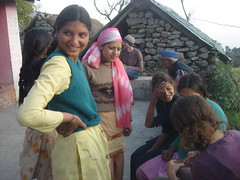
The technology, skills, and lore of making bracelets spreads fast.
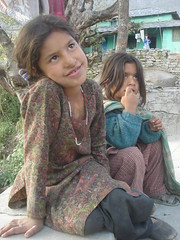
We attract some more kids.
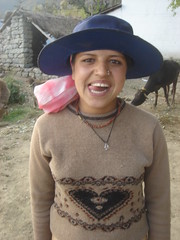
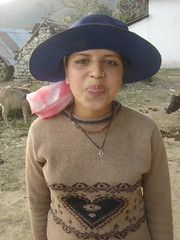
The sister puts on Alex's hat and some funny faces. She is super playful and sweet.
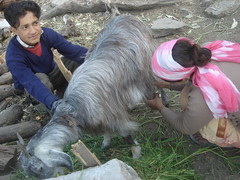
We are offered Chai. Why not? The baby goat's mother is put to use, generating goat's milk that hopefully tastes nothing like feta cheese.
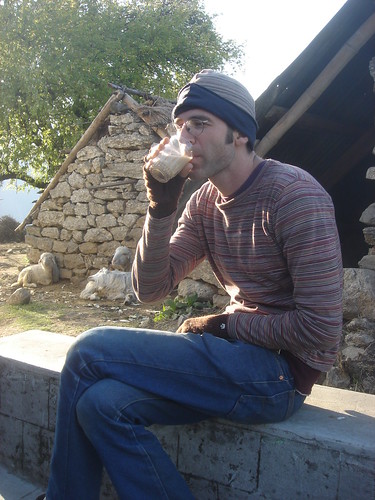
The milk does not. Alex happily consumes the milk in Chai form.
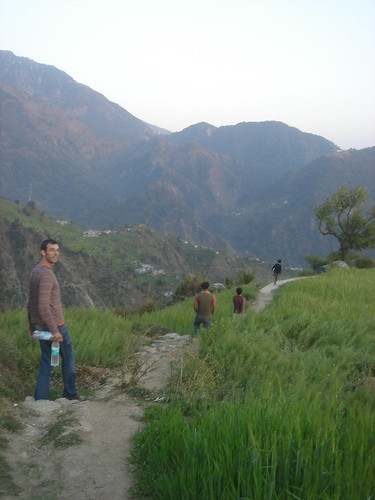
Alex and I set off to find some water that is potable to our sensitive western stomachs. We hike up through the village to the house that is known as the one that westerners stay in. They have bottled water for sale.
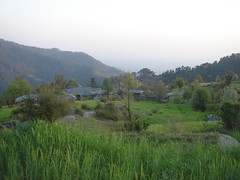
This is the village from above.

Hello, villager!

We go upstairs for dinner. This is the staircase from above.
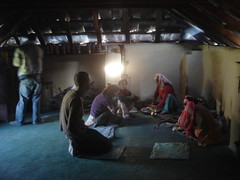
Dinner is really interesting. We go upstairs, into the main part of the house. The lower story has two rooms, one for each son. We are staying in the older brother's room, which has a tv, bed -- all the trappings of a modern, western, wealthy teenager's room. Upstairs is where the rest of the family lives, and it is bare. It is a packed floor with nothing on it. Some empty rice sacks are set out for us to sit on.

The mother and daughter sit around the cooking area, and prepare and serve the food. When that's done, the father sits on one side of the fire, and the mother the other. Everyone eats off of Thali plates, and we, the guests are served first, along with the father. We eat first, and after we finish, then the sons are fed, and after that, everyone else. It feels like a quiet, important, ritual of some kind.
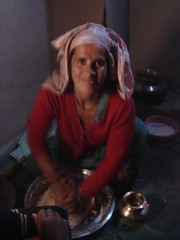
The mother is cooking chapati while we are eating, so that it comes out hot. The standard Indian generous and warm hospitality is in effect, and we are encouraged to eat and eat and eat. The father is quiet, solemn, even, his mind somewhere else, but the mood is unquestioningly hospitable.
I have the bottled water with me, and I immediately feel how completely and totally rude it is for us to have brought our own water and not share it in this context. Everyone knows that we can't drink their tap water and need our own, but it's totally obvious that it's wrong to have some private stash of food and not at least offer to share it. I offer some to the father, who thinks for a moment, and then processing some similar social rules, no doubt, takes a token amount into his glass.
They use their hands, but we are offered spoons to eat with, which we accept. Interestingly, the younger son, Aman, insists on using a spoon. His older brother, with the nice room we are staying in, uses his hands, and eats an incredible quantity of food. He's clearly doted upon.
At the end of the meal, we wash our hands over our Thali plates (they have high rims) with the stash of water that is stored upstairs. Our hands are washed both before and after the meal by the daughter, who pours water over our hands, over a drain/washing/sink area. It is like the ritual Jewish hand watching ritual with pouring vessels of water over hands. In this case, it actually feels like the most necessary and sanitary hand washing option. The water is precious, not just because the daughter is pouring the water over our hands until we are done, but because we know that all the water up here is manually carried upstairs into the house, from a well about 100 meters away. We would consume less water in the western world if we had to carry it upstairs, wouldn't we? It flows so easily that it doesn't feel as precious as it is.
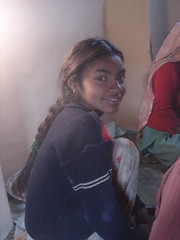
We talk about whether or not we should be paying for this, and how odd it is that they wanted no money. In the morning we are invited to breakfast, which we planned on skipping out on so that we could make more progress on our trek. Cooking and eating is a real operation, after all. We debate, and decide we might as well -- it feels rude to turn them down. We talk about maybe giving them a gift when we return, somehow. We don't want to offend them by giving them money as a gift, but a present, that's ok, right? We think about it. We'll be back on the return route.
The kids love my cell phone. The daughter asks if she can make a call. Aman wants to play games on the phone. He likes Snake. It reminds me of my fascination with computers when I was younger. Maybe kids don't want laptops, like the One Laptop Per Child effort -- kids want cells phones. One Cell Phone Per Child. OCPPC.
As we set off in the morning, there's this confusing discussion with the big brother. He wants to come with us, but he can't make it in time. So maybe he'll meet as at the lake site in the evening, which seems unlikely to us. His younger brother really wants to come with us. We're a bit hesitant about taking Aman with us. We planned our food and supplies carefully. What will keep him warm? He says he'll bring a blanket and food. These things are discussed, and Aman is coming with us, it seems. Ok, then.
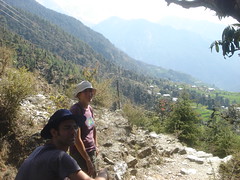
Where are we going? This is hard!
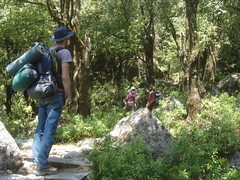
We go through a wood. We are seeking water, clean water that isn't downstream of people doing laundry or something. A spring. Rivka thinks she's communicated this requirement to Aman, and he fill up along the way. We can always boil water when we camp, but we need something to drink now, and boiling is a pain.
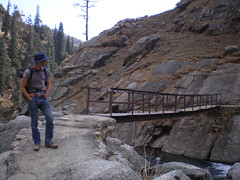
We pass some bridges today and yesterday. Rivka really wants to cross some bridges, but none go where we want. We saw a bunch yesterday, and some today, but I don't think we have to cross any of them. Bummer. Maybe she'll get her wish at some point.
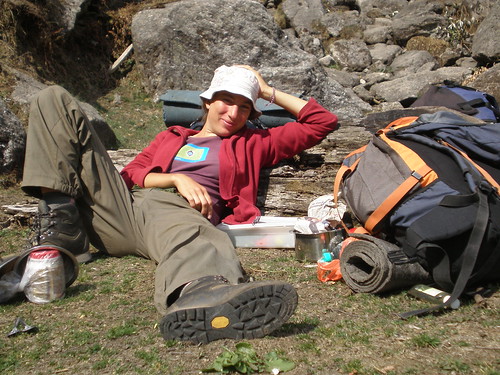
Break time! Taking breaks to eat and enjoy the sun is an important part of trekking. Note the container of Ghee at Rivka's right foot. Mmm... Ghee.
More resting.
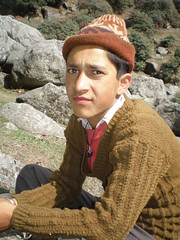
Our companion, Aman.
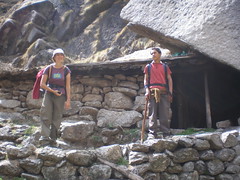
On the way up we start to pass these shepherd huts that are totally unused right now, since winter is just ending here, and it's still cold and hard to get up here. We're tired, and would like to stay here, but we've got to get to the lake!
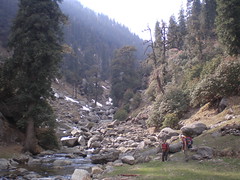
This picture is too big, too grand, too expansive to put in such a small place as a web site. Try printing it out and taping it to your forehead, facing in to your eyes. Low tech VR.
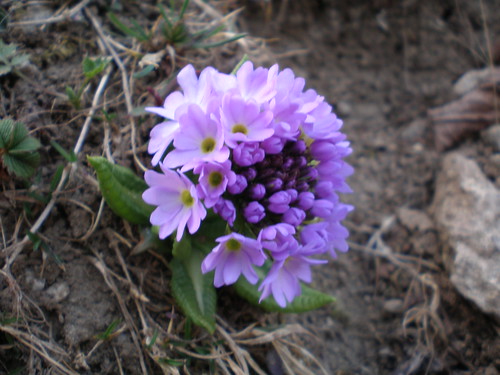
Small wonders abound, too.
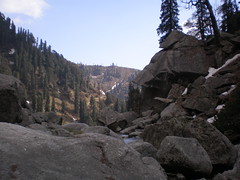
But let's not forget about the big ones.
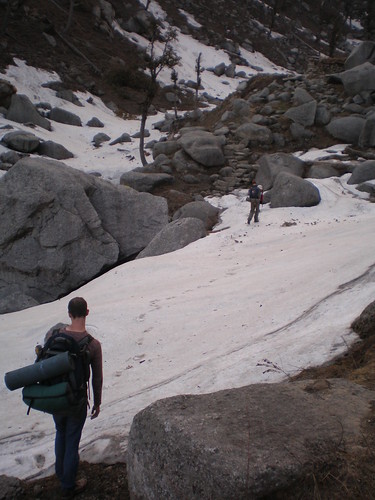
Right as our energy levels are dropping, the trek starts to get a bit more hard core. If you look closely, you can see a staircase in front of Rivka and Aman (the small figures in the photo). That staircase is what we would be climbing if we here at a more reasonable time of year. Pff. That would be too easy. Our staircase is mostly covered in snow. The snow covers the river and the sides of its banks. The snow can get deep, and is slippery. There's an icy river that is covered over in snow that we are forced to cross multiple times. Sometimes just on the snow. If we fall through, it's the end. Luckily we have Aman, who seems to know what he's doing, and picks out routes for us along with Rivka.
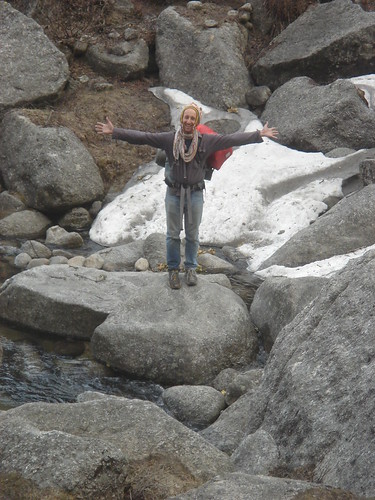
That is a picture of a cold and tired man, whose enthusiasm is only slightly waning. Note that he is crossing an icy river in the Himalayas, in India. He may or may not have done something silly and gotten one of his pant legs really cold and wet. These pants are mostly cotton, unfortunately.
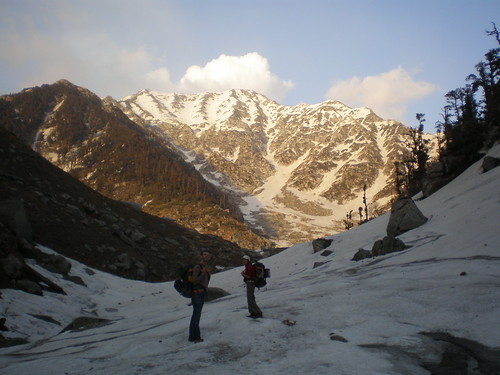
Are we there yet? We might be cresting the last turn. That brilliantly colored mountain behind Rivka and Alex is lit by the sun setting on the lake valley we'll be camping in. It's going down through a mountain pass on the left side of the picture.
Here is a photograph of the frozen lake, taken in our helicopter, which is very handy in epic visual moments such as these.
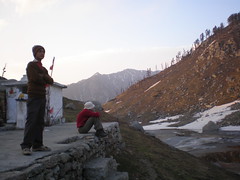
A small complex of stone huts and shiva temple overlook the lake. In warmer times, shepherds bring their flocks up here. Now, it's just us.
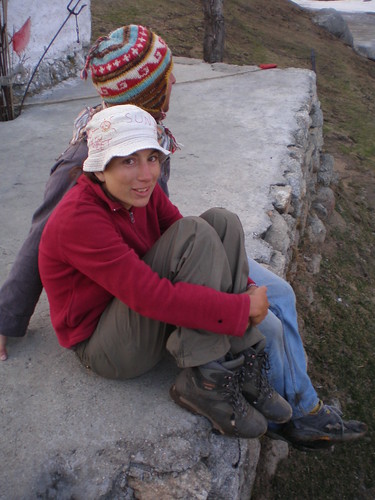
Rivka and I check out the view. It's cold up here, and everyone is oh so very tired, and oh so happy that we've gotten to our spot for the night.
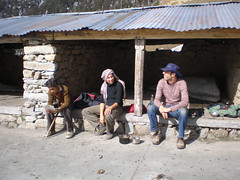
Our digs. A series of rooms. Our room is the one in the left side of the photo. That's where we're staying. We're the only people at this fancy hotel. Surprise! We never figured out the number for room service.
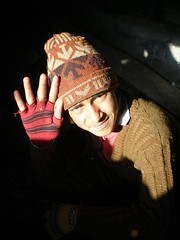
Aman, waving to one of our professional camera men from within the shade of our room.
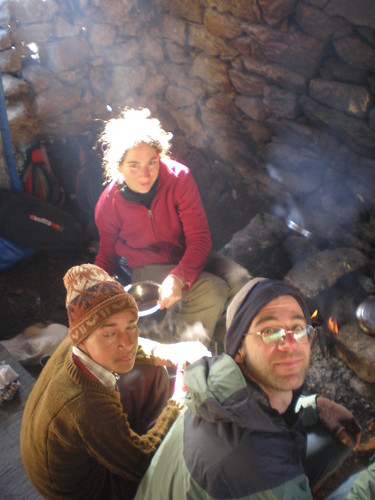
Here is three out of four of our Fantastic Four, making dinner in our cozy shepherd's hut. The setting sun is doing things. Things with light and magic.
Our room is 1/2 fire pit, and 1/2 wooden floor boards. We rig up the tarp to block the wind from the breezy door, to help with the freezing to death thing. Logistically, we're at an interesting spot, as Aman doesn't have a sleeping bag (just a blanket). We do, it turns out, have enough food to share with him without dipping into his stash. The amount of warmth and space available is a different matter. Space and warmth are often inversely proportional, however.
We explore some layout possibilities, and settle on an alternating head/feet configuration. We all go to bed, but it's so cold that nobody is really sleeping. Some time, Aman sits up, and says to me: "Baya, baya!" I sit up, and he shakes my hand: "good morning! good morning!" It is not at all morning, but wouldn't that be nice? I tiredly convince him to let us both go back to sleep, or try to do it. At some point in the night, Aman wakes up Alex, and with body language only, asks to share his sleeping bag, rendering them both much warmer.
At breakfast, I construct a smashingly well formed proof about how oatmeal + ghee > plain oatmeal. Careful experiments performed by all of us verify this to be empirically true, as well.
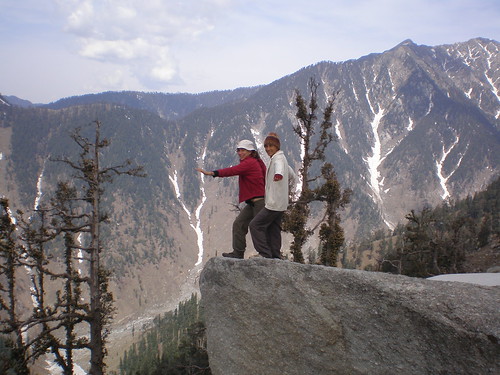
Our plan is to stay here again, for another night, before heading back. In the morning, before we set out to explore the lake, Aman asks if we're going to hike to Jammu Got, and camp there, a cool playground like place that's on the way back. It was such a hard hike on the way up, we decide that today should be a well deserved chill out day. And so we do. Here is Rivka and Aman posing on a ledge at the lip of the lake.

What a great spot!
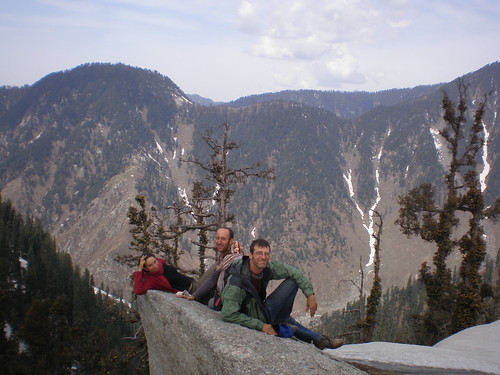
One of our winning photos from the 2008 Team America India snowsuit calendar.
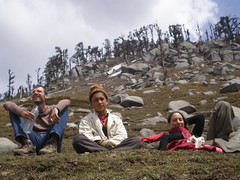
As we circle the lake, we take a break and enjoy the view and sunlight.
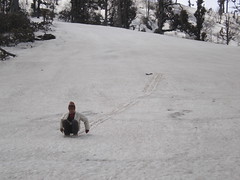
Above, Aman does a trial run of our newest invention...
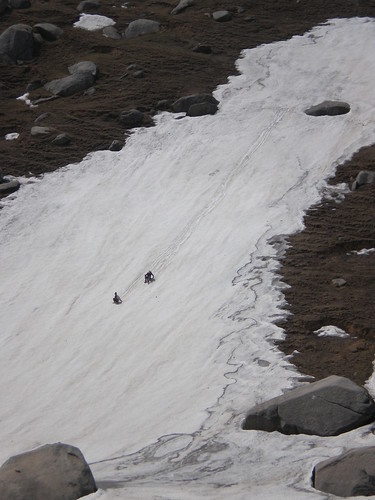
The world's largest snow slide. Rivka and Aman do the test run, and Alex and I quickly follow in their bold foot steps. Or is that foot slides?

No Abominable Snowman is to be found.
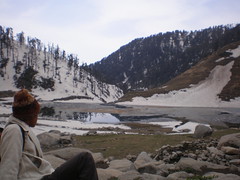
This is the view across the lake, towards where we hiked up into it, and where we are camped.
I realize, about now, that we are about to undergo a long trek back to the US of A from this place. A chilled himalayan sheperd's hut that sits beside a frozen lake, all the way back to Berkeley. This is the remotest place we'll get on this trip, a gap which represents a substantial quantity of space, time, and psychological energy.
At this point, our adventure takes a slightly crazy and dangerous turn. The clouds darken, and it starts to snow. Aman, who knows this place better than any of us, looks a bit nervous. We talk about it, and decide it's ok, and continue our trek around the lake.
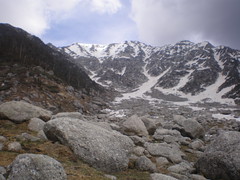
Some rocks. We return to our camp, and the snow doesn't stop falling. Aman starts to make dramatic hand gestures, indicating in pantomime that we could easily awaken in waist high snow, which, when we picture it in our heads, sounds a bit hard to trek back down in. How much would it hurt to camp out here an additional night, if we had to? We discuss and dither some more, as the snowfall does a low frequency amplitude modulation, which creates both false hope and fear. Finally, we decide that it would be best to have a snack, and pull up camp, and trek down. It is still unclear to me whether this was a wise decision or not, but reality is an uncertain thing, and we just have to place our bets where we think we're likely to win.
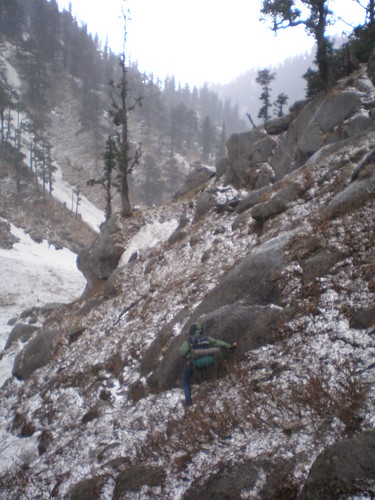
It turns out that trekking down a mountain with no real path, while it is snowing, raining, dark, slippery, and cold isn't very easy or safe, but it is scary and exciting. Note the rain, snow, and hard working Alex trying to keep a firm footing on spaceship earth, which is doing its best to toss all of us into the cold of deep space. We slowly hike down for hours and hours, carefully picking our way across all kinds of challenging obstacles.
At a certain point it starts to thunder and lightning, and things get a bit crazy, Hebrew bible sorts of craziness and natural phenomena, except with more snow. It gets hard to see, on account of all the snow and water in the air. Alex just lets his bag slide down to where he's heading, since staying on the mountainside is hard enough. I lose the group, and wander around in the cold and rain, hanging onto tiny high altitude plants for balance. This is in order to prevent myself from tumbling down a slippery mountain into a snow covered icy river, which seems, as far as fates go, to not be entirely out of the question at this time. I manage to overshoot the group, lose a water bottle, but find everyone huddling for cover under a big rock. I'm wet and shaken, and so is everyone else.
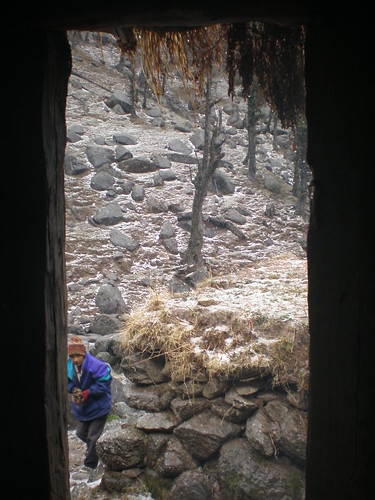
We decide to make camp in one of the shepherd huts we passed on the way up.
Rivka has, since the inception of our trip, plotted to cook chapati, or die trying. We settle in, and she starts into making Indian flatbreads, while we all try to get us and our things dry and warm. I work on the rest of dinner, whose star ingredient will be okra, and chop up a bunch of garlic for Rivka to put in the chapati. Toss in a bunch of ghee, and you have a recipe for success. Rivka goes into a Chapati making trance for a long time. The chapati turn out to be impossibly good. Even Aman thinks so, too. That's what ghee and garlic go for you. Vitamin G squared. Yeah.
At some point during all of this, Aman, who slept less than anyone last night, crawls into Rivka's empty sleeping bag and goes into an uninterruptible slumber. This creates a new mathematical problem of surface area, heat, sleeping bags, and bodies. It is decided that Alex and Rivka will combine Aman's blanket and sleeping bag and try to stay warm through a surface area minimization operation, while I will get the remaining sleeping bag, which I end up curling around Alex's contour for extra warmth. It's really cold up here.
Yours truly, in the morning, doing the dishes in a stream that conveniently runs by our new mountain home. We pull up camp and head back towards civilization, by way of the mountain pass Aman wanted us to go to all along.
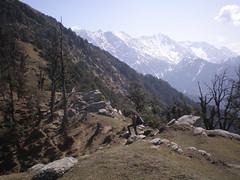
Here is Alex, standing at the intersection of multiple worlds, a saddle point of possibilities.
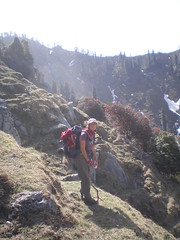
We pass a troop of monkeys, which efficiently and silently move up the mountain, out of harm's way. All photographs were confiscated by the border police.
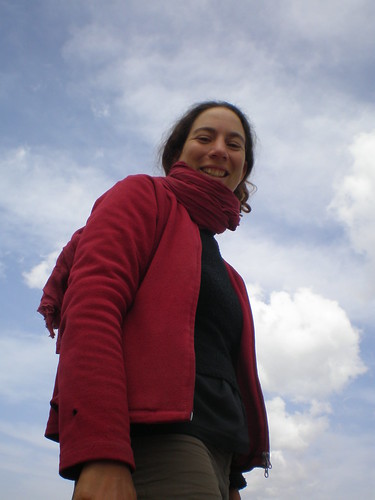
Rivka, above, reminding us of a Monet, below.

Today's weather is a bit nicer than yesterday's.
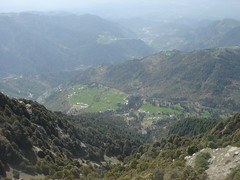
The mountain side takes on an additional fairy tale like aspect on our way down. Small yellow butterflies are everywhere, soaking up the sunlight and high altitude. It's some kind of weird fantasy land.

At points along this trip, Rivka sings and translates various Hebew poems and songs for us. My contribution is the children's song Parpar Nechmad, (Nice Butterfly). Come to me, nice butterfly, sit in the cup of my hand. Something like that.
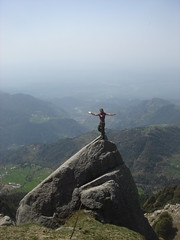
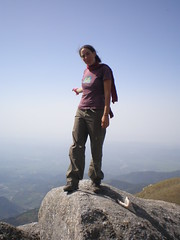
Aman was right, this is a great spot.
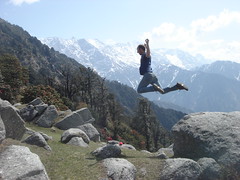
Learning how to fly. All this talk of butterflies, mountains, flapping, and fluttering makes us a bit crazy.
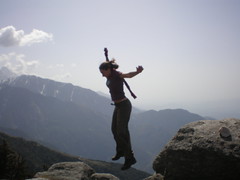
Lessons from a pro.
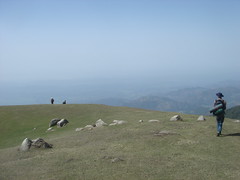
We pass a few young Indian hiking groups on our way down. Yeah, 'sup.
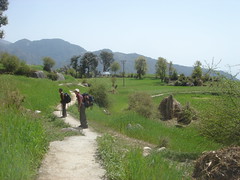
Eventually, we reach Aman's village where we started the day before. We're invited in for another meal. The father comes in, and I ask him in Hindi how he's doing, and he gestures to his legs, indicating that being the milkman -- carrying milk over the mountains every day -- is really hard on him.
We prepare our gift for Aman, an expensive headlamp and some chocolate, when his older brother, who we found kind of sketchy and charming earlier, asks us for payment for all services rendered. Guide, housing, food. It's weird, since we didn't even want Aman to come with us, and thought we were taking care of him in many ways. We are quite surprised by this, given our conversation earlier. We eventually decide to just give Aman our present, and forget about the brother. The father doesn't really care, and Aman is simply sad to see us go. It all makes a bit more sense, now, the older brother with his very modern western style room with bed and tv, and the family living in a very traditional, less wealthy way, in the same house, and it all clicks together for us. We're all quite shaken by the whole experience. Giving Aman the headlamp feels good, I feel lightened by leaving something I care about behind, like I'm floating off of planet earth ever so slightly.
This entire experience with the family is sort of essentially Indian for us. One of the reasons people love to travel in India, I think, is how confronting it is, upon all your senses and sensibilities. Of any place in the world, India has the highest highs and lowest lows, the most intense positive and negative experiences you'll find anywhere. The wonder of eating with a family and then having the older son try to squeeze our wallets and hearts on the way out. The majesty of the Taj Mahal, and the oppression of the heat, touts, and flies that surround it. The good and bad come one after another, sometimes at the same time, and that's one of the basic elements of experience here. A world of stuff held together by strongly paired negative and positive particles. We leave the village, and head down towards a road where we'll find a bus back to McLeod Ganj.
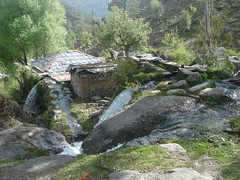
On the way back, we pass a flour mill we saw on the way up. You've got to click through and see this photo full size to appreciate it. It's the water feed to the race mill. Water is channeled through this track, where it is channeled to do useful labor, like turn the flour mill pictured below.
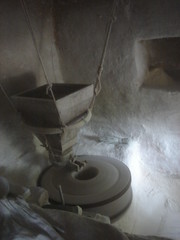
Hi-tech. One of the most important inventions ever.
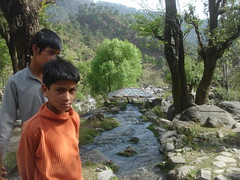
The water exiting the mill, and heading down into another building
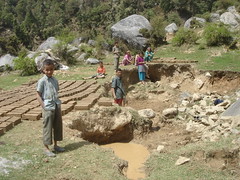
Some people making bricks. We head down the mountain path, away from the village. At one point, the entire path is blocked by a huge flock of sheep. We make our way through, chasing them up and down the slope.
I think about giving gifts -- what does it mean? Why do I feel so light after having given Aman those presents? Levity is the word that comes to mind. Playfulness and nonsense is one way to reach the feeling of levity, but letting go, giving up/away something you care about, works, too.
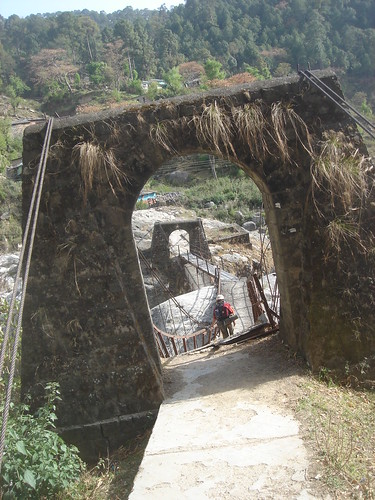
Rivka finally gets her bridge wish. We have to cross this bridge to get across a river. It's twisted up, layered, just barely maintained, and looks as if it's about to slide into the river at any moment. Logs are thrown onto the sheet metal floor to prevent them from sliding off. In other places, poured concrete holds bits of the bridge down. It's a hack on top of a hack, carefully balanced on some shoddy patchwork job, all built inside of an accident. You can see where parts of the bridge snapped, and lie hanging. Newer sections of bridge were simply built on top of them. It looks like a death trap. But it works.
The bridge is a wonderful metaphor for India. All the layering, collapsing, and texture -- It's a wonder that it works at all. India feels like a swirling mass of chaos to me. Overused infrastructure, a billion people doing whatever they want, it seems. Nonsense city intersections that seem to threaten everyone's life. A wonder that the country works at all, a working wonder. A miracle. Beautiful, elegant and idiotic, all at once. This bridge is as scary as it looks, and we cross it one by one, executing some kind of Indiana Jones like adventure script in our heads. Just as Rivka is crossing, a bunch of locals come across as a big group, and nonchalantly cross the bridge. Wait! Don't you know you could get us all killed!
All Simultaneous Possible Worlds Smashing TogetherWe've taken to saying possible. It's possible. Yecholiot.
Indians are fond of the word "possible." Possible. It's such a great word. It reserves judgement, difficulty, cost, and simply holds out the existence of a possibility. Yes, we could do that. How, feelings, and opinions, are unspecified, left for later. And this doesn't seem to be just a quirk of language translation. Shalin says it makes him crazy how people often leave out their personal opinions. You never know what somebody is thinking. It's a little Japanese. The opposite of cho-to, one of my favorite Japanese words, which means: "a little", or "no." And the Indian head waggle. The side to side one that means yes, no, maybe -- all at the same time. All possible meanings. A little shake could mean everything from complete agreement to reluctant acknowledgement that you said something. It's a gestural possible. But these are very powerful conversational tools. Saying possible, or a little head shake, gives people the affirmation they crave. The acknowledgement that you heard them, understand what they said, and are listening, is probably the most important part of a conversation. I heard you, I understand. Agreement is something separate.
But this trail of open possibilities is more than just polite dithering. Possibilities abound, explode. Anything is possible, in India, and everybody knows it... India is all possible worlds, people, smashed together in some kind of giant particle accelerator. All landscapes are here, mountain villages, city slums, beaches, deserts, castles, ancient civilizations, long abandoned, and some still inhabited. All technologies, ancient and modern, religions, experiences, foods, levels of wealth, and people coexist, smashed into one tiny subcontinent, side by side, on top of and inside of one another. A country that grows smaller every day as the population grows, and technology shrinks all distances. The experience of traveling here is driven by the energy released by these overlapping possible states. That's the magic. Quiet amidst chaos, and chaos inside of quiet. All these things interfacing with one another.
Contradictions abound. All the good and all the bad we experience come in one big ball, a tightly wound up package of feelings and energy. It's harder to avoid or ignore certain aspects of life here, as we can at home, where we choose to put or only see things which hurt in certain places, hidden, packed away. At home, sick people live in hospitals, old people in nursing homes, and poverty just barely leaks into our world as beggars in the street. We don't know how our clothing is made, or how magical this process is, and who does it. Here, we see, feel, and touch everything, all possible states of affairs at once. All the layers of abstraction and scaffolding that make up our daily modern lives are peeled back, here, revealing multiple simultaneous states, the underlying structure of what makes a community live and a civilization tick. We see how our food is made, how the people who grow it live, and we watch them make the chapati we will eat. Their children selling us things. Adolescents make us breakfast, or, dressed in rags, beg for coins in the street. Internet cafes operate adjacent to newspaper fueled cooking fires.
As a travel experience, India is filled with the most spectacularly awesome and bitter moments you'll find anywhere in the world. Big hearted Indian hospitality one moment, and confrontation the next. Tiny, warm, intimacies hiding next to scenes of desperation. All simultaneous possible worlds, all potential Indias, people, and potentialities exist here, at once.
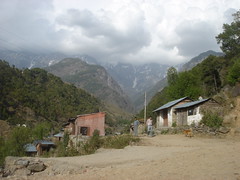
We sit and rest on the curb of a dusty mountain road, waiting for the bus back to McLeod Ganj. We check back into our guest house, tired and dirty. That night we finally meet Bhola, the mysterious owner of Bhola's guest house. It's a very Japanese feeling meeting, all of us bowing and thanking one another, over and over again. It turns out Bhola bought a taxi, and doesn't hang around his guest house anymore. Uri says he used to sit around Bhola house and drink chai with the guests all day, chatting.
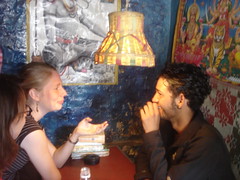
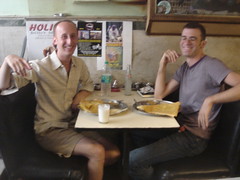
The next day we duck into Moon cafe for breakfast. Inside this tiny closet of a cafe are two handsome people finishing breakfast. We squeeze in next to them.
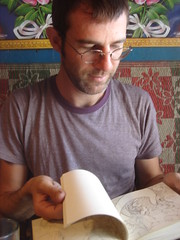
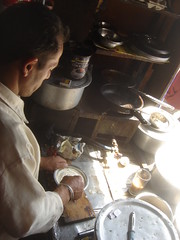
Above, Alex having breakfast, and the cafe proprietor draws in Alex's sketchbook. Something like that. You figure it out.
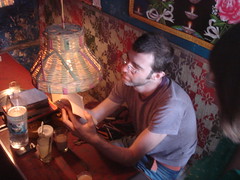
In the entangled logic of McLeod Ganj, we meet one of the German girls we met on the train platform in Jodhpur. We chat for a bit. Then, I happen to be looking out the narrow doorway and see a familiar head fly by.
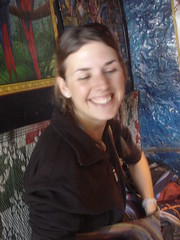
I jump outside and greet Becky, whom we last saw in Rajasthan. How random. Or not.
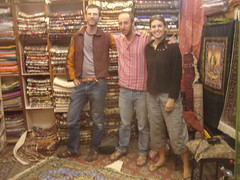
Here we are, buried underneath a mountain of Kashmiri carpets. An important part of choosing a carpet is making sure that photos of you and your friends look good in front of it. I spend way too much time shopping for some nice carpets, then can't get a shop to give me a price I want, and walk out. There are so many carpets, that choosing one is a serious time investment. And then, the shopkeepers have you. How can you walk out, the key to getting a good price, if you've already invested? It's a problem.
We go with Rivka to Chabad for Shabbat, on our last night in never-never land. No pictures, we learned our lesson last time, thank you very much.
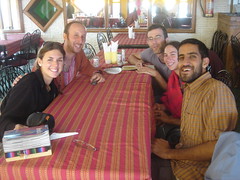
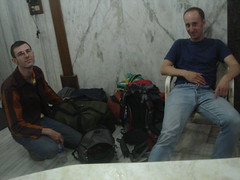
Goodbye! Becky, Chaim, Alex, Rivka, and her boyfriend Uri, returned from meditating on a mountain. We exchange goodbyes, gifts, and wishes.
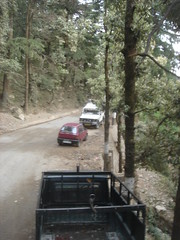
We make our way to our Earthbound bus, destination Delhi.
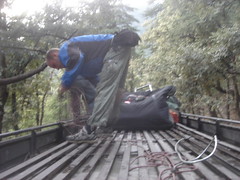
A traveller ties his bike down to the roof.
Be sure to tune into our upcoming last and final installment of Phases Crossed. Will our adventurers make it out of India alive, or become part of a human trafficking operation gone horribly awry? All will be revealed in good time.